

Monsoon home prep in Arizona: roof edge, fascia, patio cover
Before the summer storms, walk around the outside of the house. What to look for at the roof edge, the fascia and the patio cover, and what to check after a storm.
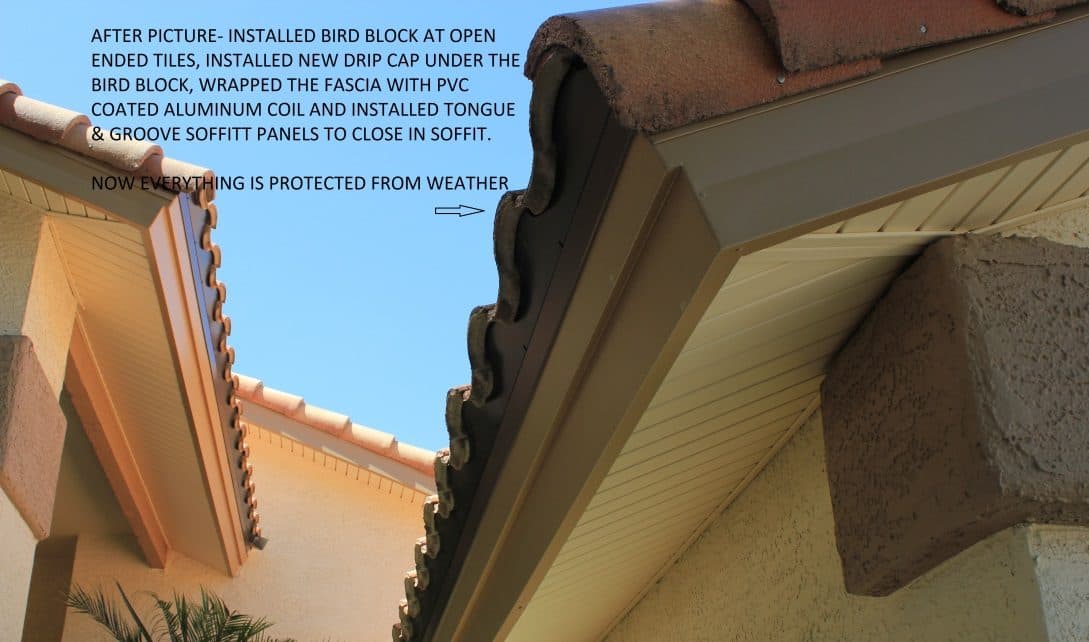
Good monsoon home prep in Arizona starts at the top of the house. The National Weather Service has used fixed dates for the season since 2008, June 15 through September 30, and the weeks before it are the time to look at the parts of the outside that take the wind and rain first.
What the storms bring
Monsoon storms in the Phoenix area bring dust storms, sudden heavy rain, lightning and downdrafts called microbursts, whose winds can top 100 mph at times. Wind works on anything loose at the edge of a roof. Rain finds any gap behind it.
Arizona monsoon home prep starts at the roof edge
On a tile roof, look at the first row of tile along the eave. Curved tiles leave openings at their ends unless a bird stop, also called an eave closure, fills them. Without one, birds and other animals can get in under the tile. The closure also sets that first row at the right height.
Then look just below the tile or shingles for the drip cap, the metal strip that runs along the edge. Its job is to send water into the gutter, or out past the fascia where there’s no gutter. When it’s missing or bent, water can cling to the fascia board and start it rotting. If the house has gutters, clear them too, and check that the downspouts empty away from the foundation.
The eave pictured above is a finished one from our files: bird block filling the tile ends, new drip cap below. The roofing page covers this edge work.
The fascia
Walk the house with the fascia in view, west and south sides first, since they get the most sun. Peeling, bowed or split boards and stained corners are the ones to note; our fascia repair post goes through the signs one by one. Soft wood matters more in storm season, because it can’t hold a gutter or drip cap tight when a gust hits.
Once any rotted boards are replaced, wrapping the fascia in aluminum and closing the open eaves with vinyl leaves no bare wood up there for the next storm to soak. That’s the work on our soffit and fascia page.
The patio cover
- Look at where the cover meets the house. Gaps, loose fasteners or stains on the wall below it are worth a call.
- Check each post at the base for cracks in the concrete around it, or a lean.
- Clear leaves and dust off a solid cover so water can run to its edge.
- Look up at the underside for sagging panels or water stains, signs that water is sitting on top.
- On a wood cover, look for split rafters and roofing that has started to lift.
If an old wood cover is near the end of its life, it may be time to price an aluminum patio cover before it has to ride out another season.
Around the yard
The Weather Service also suggests securing loose patio furniture and trash cans before the season, or moving them indoors. Cushions and umbrellas belong on that list, and branches that rub the roof edge are worth cutting back. Anything a gust can lift can end up on the roof or on top of the patio cover.
After a storm
Stay inside until the storm has passed; the Weather Service advises waiting until 30 minutes after the last thunder. Then walk the house again. Look for tiles that slid, drip cap that lifted, fascia that pulled away and debris on the patio cover. Photos taken from the ground make the first phone call easier.
Want a price for your house? Call (602) 678-3737 or ask for a free estimate.