

Fascia repair in Phoenix: signs of dry rot and what fixes it
Peeling paint at one corner of the roof is often the first sign of a rotting fascia board. How to check the wood, how termite damage differs, and what each kind of repair involves.
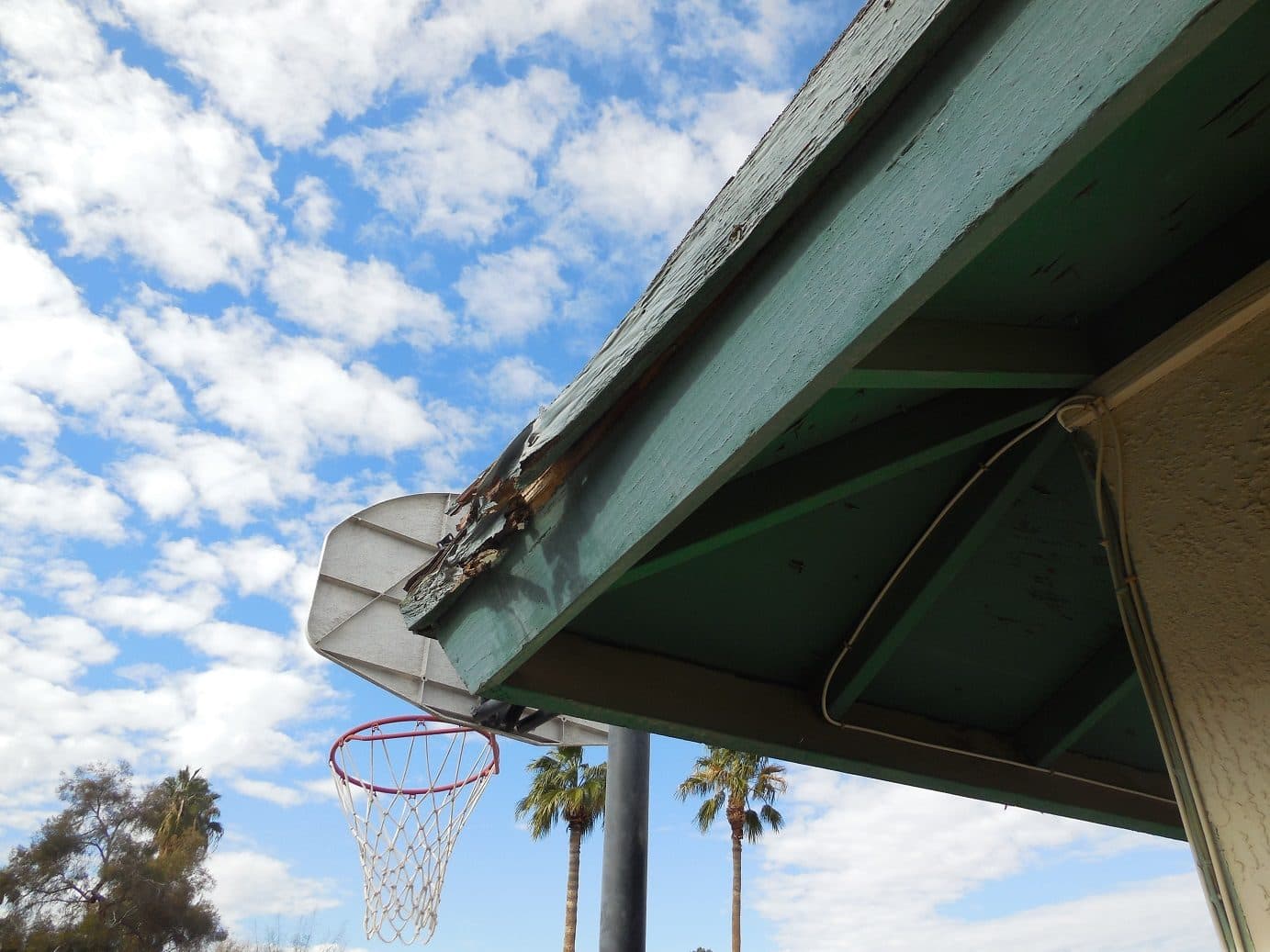
Fascia trouble usually starts small: a patch of paint lifting at one corner of the roof, or a board that looks darker than the rest. This post covers how to tell whether the wood under it is rotting, and what fascia repair in Phoenix involves at each stage, from a soft spot to a run of boards that has to go.
Why wood rots in a dry city
“Dry rot” is a misleading name. Every fungus that decays wood needs moisture before it can start, and wood that stays dry doesn’t rot. In Phoenix that water comes in bursts. The City of Phoenix says monsoon storms peak between mid-July and mid-August, and the Weather Service’s Phoenix climate memo notes occasional Pacific storms from November through March.
The fascia catches that water from more than one direction: - Runoff from a roof valley or corner that pours over the same spot every storm - Water that slips behind a gutter instead of into it - A roof edge with no drip edge, so water clings to the board and soaks in from the top - Paint that has cracked in the sun and lets water into the grain
Signs to look for
- Paint bubbling or peeling in one area while the rest of the trim looks fine
- Splits running along the grain, or two boards separating at a corner
- Dark streaks on the face below a roof corner
- A gutter that sags, or gutter screws that keep working loose
- Bees, wasps or birds going in and out of a gap at the roof edge
- Wood that gives when you push an awl or a thin screwdriver into it
Look from the ground first, walking the whole house. If you go up a ladder, push gently and compare: sound wood resists the tip, and decayed wood lets it sink in with little pressure.
Not every hole is rot
Termites eat fascia too. University of Arizona Cooperative Extension lists fascia boards and soffits among the wood that the dark western drywood termite attacks. Drywood termites live inside the board and push their pellets out through small holes, and a pile of pellets below those holes is often the first sign anyone notices. Subterranean termites build mud tubes instead.
If you see pellets or mud tubes, have a pest professional inspect before any boards are replaced, so the termites are dealt with before new wood goes up.
Fascia repair, from a soft spot to new boards
The right repair depends on how much wood is gone: - A small soft spot. Grind or dig out the decayed wood down to sound fibers, fill the hole with a two-part epoxy, then prime and paint. It buys time, but the board is still painted wood in the sun. - A rotted section. Cut back square to sound wood and fit in a new piece. A joint that opens up lets the rot come back, so it has to be tight and well bonded. - Long runs of bad boards. Replace them, then cover the fascia with bent aluminum so there’s no paint left to fail.
Whichever you choose, deal with the water at the same time. A missing drip edge, a gutter that overflows, or a corner that dumps runoff will rot a new board the same way it rotted the old one. On a tile roof that often means new drip cap and closures at the tile ends, which the roofing page covers.
Covering the repaired wood
Metal over decayed wood only hides the problem. The rot keeps going behind it, and fasteners don’t hold in soft fibers. Once the bad wood is out, covering the new boards takes them out of the paint cycle. We wrap fascia in aluminum and close in the eaves with vinyl soffit; see the soffit and fascia page for the method, and the gallery shows what boards like the split one pictured above look like once they’re covered. If you’d rather keep painted trim, see painting.
Want a price for your house? Call (602) 678-3737 or ask for a free estimate.