

Solid or lattice patio cover in Arizona: which shade works
Lattice lets some sun through and a solid roof stops all of it. How each one behaves through an Arizona day, a monsoon storm and a mild winter.
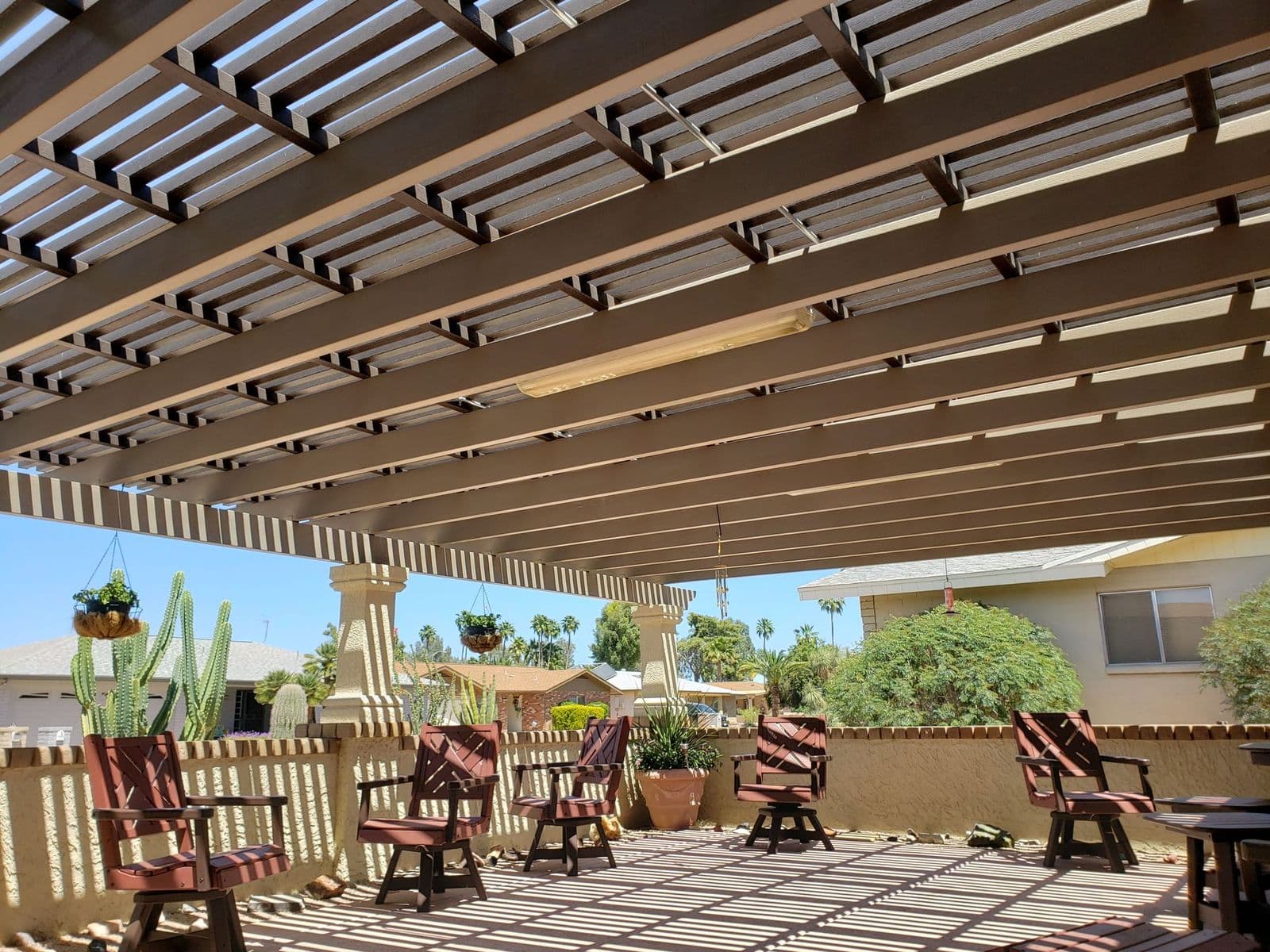
A lattice patio cover in Arizona does something a solid roof can’t: it lets part of the sky through. Whether that’s what you want depends on how you use the patio, which way it faces, and how you want it to feel on a January morning.
How a lattice patio cover works in Arizona sun
Lattice is a grid of aluminum tubes with gaps between them. The tubes block part of the sun and the gaps let the rest reach the floor, so you sit in striped shade rather than full shade. The tubes come in more than one size and spacing: one manufacturer’s options run from about 40 to 60 percent coverage, with bigger tubes or tighter spacing giving more shade. Breezes pass through the gaps instead of being stopped by a roof.
The stripes move with the sun, so the pattern on the floor changes through the day. Around midday in summer the sun is high and the stripes fall almost straight down. Early and late in the day the sun is low in the sky, and no cover, lattice or solid, shades much beyond its own edge.
How a solid cover works
A solid cover stops the sun completely. It also keeps rain off, which matters if you cook on the patio or leave cushions out through storm season. Insulated panels add a foam layer that keeps the patio under them cooler in summer than bare metal would. One of our past jobs replaced an old flat aluminum cover with an insulated one.
The trade-off is light. A solid roof deep enough to shade a table also shades the rooms behind it, and right against the house that can make them darker during the day.
Winter counts too
In winter the sun sits lower in the southern sky, and on a cool Arizona morning a patch of sun on the patio is welcome. A solid cover shades the patio in January just as it does in July. On a south-facing patio, lattice lets part of that low winter light reach the chairs, while a solid roof leaves only what slips in under its front edge.
Questions to settle first
- Do you want to sit out during a storm, or only when it’s dry?
- What’s behind the cover: a living room, a bedroom, or a blank wall?
- Which way does the patio face, and what time of day do you use it?
- Do you want plants to grow under it? Most need some direct light.
Monsoon rain and dust
Under lattice, a summer storm wets the patio, and the dust that blows in ahead of it falls through. On a solid cover the rain runs to the low edge and pours off in one line, so think about where that water lands: a walkway, a planter, or the base of a wall. Dust and leaves stay on top until you rinse them off.
Picking one
- Lattice for a garden patio, a spot by the pool where you want some sun, or a cover against a wall where you don’t want to lose daylight inside.
- Solid for a grill and dining area, a seating area you want to use in the rain, or a west-facing patio that bakes after 3 p.m.
- Both on a large patio: solid and lattice can sit side by side along the house, so ask at the estimate whether solid over the table and lattice over the rest makes sense.
Color is part of the choice. Match the cover to the house trim, or to new soffit and fascia if that’s going on at the same time, so the roof edge and the cover read as one job.
The patio covers page explains how we build both kinds, and there’s a longer comparison with shade sails and pergolas in patio covers in Phoenix.
Want a price for your house? Call (602) 678-3737 or ask for a free estimate.