

Aluminum fascia wrap: what it is and why it outlasts paint in Arizona
An aluminum fascia wrap is coated metal bent to cover the wood board along the roof edge. What it is, why it outlasts paint in the Phoenix sun, and what it can’t fix.
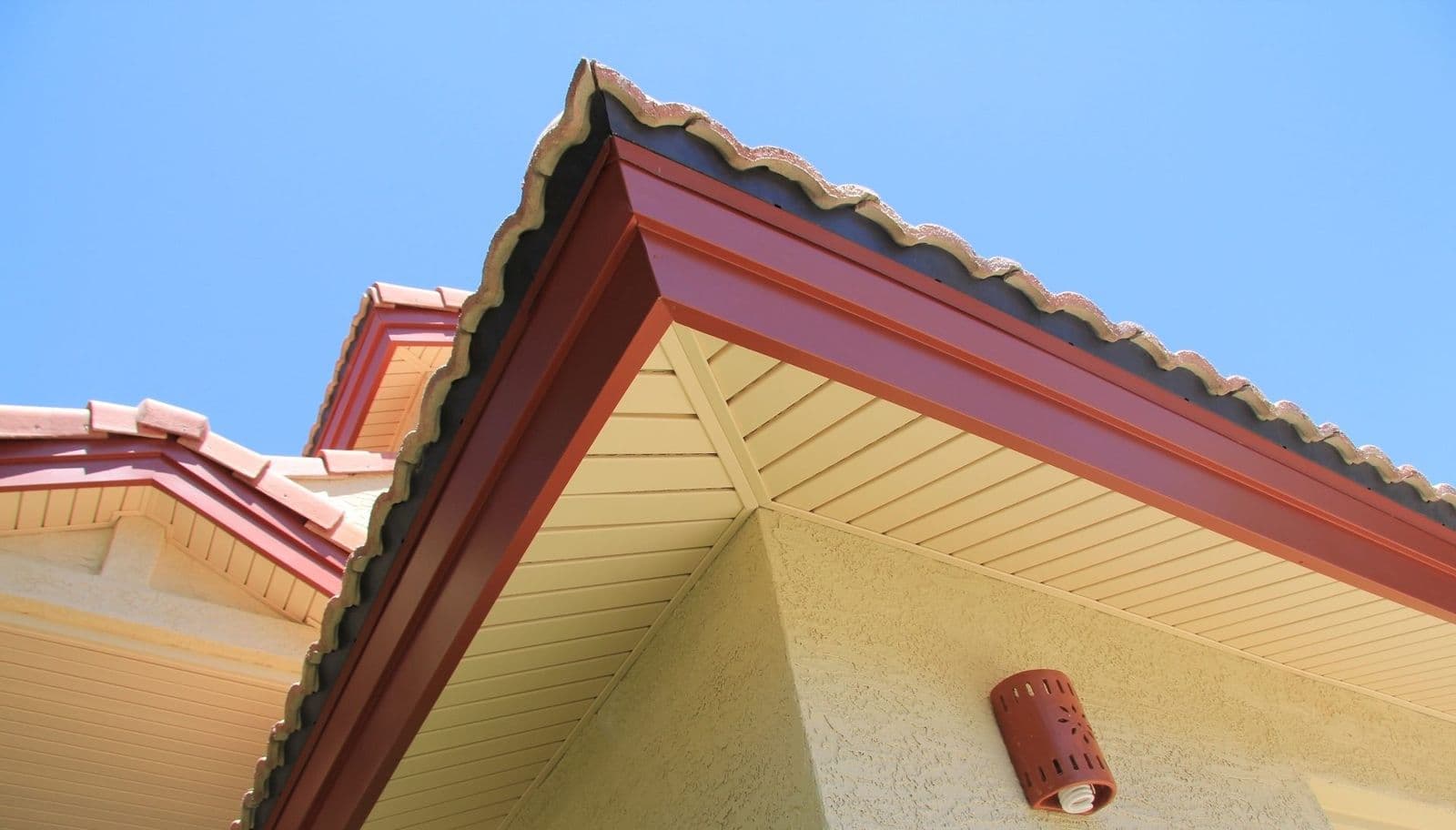
An aluminum fascia wrap is a metal cover bent to the shape of the board that runs along your roof edge. It goes over the wood, so the trim that takes the hardest sun stops needing paint. Here’s what a wrap is, how it’s fitted, why it lasts longer than paint in Arizona, and what it won’t do.
What an aluminum fascia wrap is
The wrap starts as a roll of thin aluminum coil with a colored coating applied at the factory. Our job notes call it PVC-coated aluminum coil. Each piece is cut to length and bent on a sheet-metal brake into a profile that covers the face of the board and wraps its edges, then fastened to the wood.
No two rooflines are quite the same, so the pieces are bent to fit each run of fascia rather than bought as one stock shape. Where two lengths meet they overlap instead of butting together, and on a sloped gable the upper piece goes over the lower one so water drains past the joint.
Why paint gives up on fascia here
A National Weather Service climate study puts Phoenix at about 86 percent of possible sunshine over the year, and the fascia faces that sun with only the roof edge above it. Ultraviolet light wears down every exterior coating, and the binder that holds paint together is the part it attacks most. The gloss goes first, then the surface turns powdery, and the film loses the flexibility it needs.
Wood makes the job harder. A board swells when a storm soaks it and shrinks as it dries, and over many of those cycles the paint cracks. A KTAR home-improvement column has said wood fascia probably needs repair and fresh paint every year or so.
Why aluminum holds up
- It can’t rot. Decay fungi feed on wood, and there’s none in the wrap.
- It doesn’t rust. Rust is iron oxide; aluminum instead forms a thin oxide skin in air that protects the metal under it.
- The color is part of the coil’s coating, so there’s no film on moving wood to crack.
- There’s nothing to scrape, sand, prime or caulk on the face of the board again.
What a wrap won’t do
A wrap covers a board; it doesn’t hold anything up. The trim nails need firm, decay-free wood to bite into, and the gutters still hang on the board behind the metal. So any soft or split sections are cut out and replaced before the first piece of coil goes on. The signs to look for are in our fascia repair post.
A wrap won’t stop water coming off the roof, either. If water runs behind the fascia because of a missing drip edge or an overflowing gutter, it will run behind the metal too. That gets fixed in the same job.
Tile roofs need a little more
On a tile roof the edge often needs drip cap as well: metal flashing bent over the deck at the eave that turns water away from the board. The open ends of the first row of tile also need a closure so birds can’t get in under them. Both make sense to do along with the fascia. The tile roof gables pictured above got new aluminum fascia and drip edge. Drip cap and tile closures are on the roofing page.
Wrap and soffit together
A fascia wrap pairs well with vinyl soffit, which closes the underside of the eave. Do both and the whole roof edge is covered, leaving only the stucco or block to paint. The soffit and fascia page explains the work and the gallery has finished jobs. For the walls themselves, see painting.
Coil comes in a range of colors. Pick one that suits the roof tile, the stucco and the gutters, and look at a sample against the house in daylight before you decide.
Want a price for your house? Call (602) 678-3737 or ask for a free estimate.